Every video creator knows the stress of anticipating the comments that colleagues and teammates will leave after you’ve spent all night perfecting every frame. Especially if their video feedback tends to be vague, contradictory, or downright unhelpful.
Creative projects (especially video) thrive on collaboration, but there needs to be a rhyme and reason to it. Without structure, feedback can slow momentum, muddy creative vision, or even demoralize teams. But the solution isn’t for teams to collaborate less, it’s to establish some basic guardrails that direct feedback and contributions where they’re most needed.
A great start figuring out how to strike that all-important balance is to download our guide on 5 video workflow bottlenecks creative teams face – and how to fix them. In this article, we’ll cover one of the biggest issues that leads to bottlenecks: bad or mismanaged feedback.
The hidden cost of unstructured video feedback
Having your video reviewed isn’t just a good idea, it’s an essential part of any production workflow. An extra set of eyes (or a few) can help catch issues you may have missed, and ensure you capitalize on any opportunities that weren’t plainly obvious from the start.
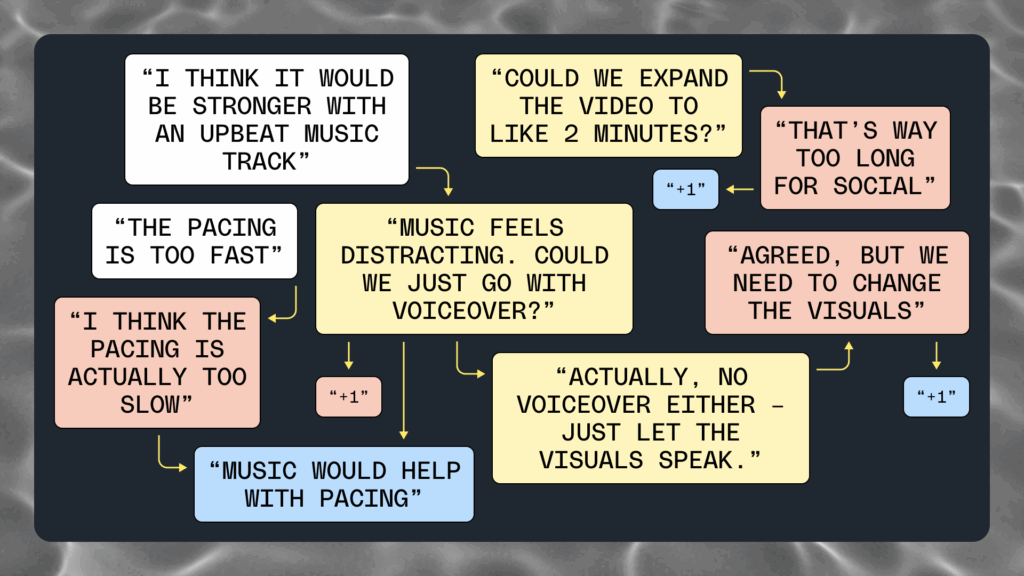
However, the review process is also a potential breeding ground for costly bottlenecks, especially if too many people are reviewing the video as a whole.
Missed deadlines, reshoots, and budget creep
Late-stage additions to the review process can bring a smooth-sailing project to a grinding halt. The phrase “too many cooks in the kitchen” doesn’t just apply to food preparation. “We kept tacking on more stakeholders for review as it got into later stages, and then they would have feedback that made it almost impossible to address without reshooting and basically starting over,” recalls Kyle Miller, Storyblocks’ Manager of Video Production.
Looping in too many opinions can happen at any stage in the production process, but it’s especially damaging during the late stages of video review. It’s basically begging to derail your project, especially if the people weighing in are coming into things late in the game and weren’t involved in the early stages.
The more people you bring in, the more likely delays will crop up as the creative process veers into death-by-committee territory. Video creators don’t often have the luxury of time, so the resulting delayed timelines and additional costs from looping in too many voices can really add up fast.
Creative burnout and reduced quality
If your team is spending too much time and energy managing stakeholders and navigating review feedback, other parts of the production will likely be negatively impacted. The most likely outcome will be the project ends up suffering, which is the exact opposite of what video feedback is meant to achieve.
Subjecting yourself to the firehose of stakeholder opinions can lead to creative burnout and reduced quality. And spending too much time fielding them means less energy to put into the project, and a higher likelihood of having to scramble just to be able to balance everything on your plate.
This is why structured opinions, solicited purposefully from a select group of experts on your team, are more likely to move the ball forward on your project than a cattle call to everyone within earshot. Less time spent batting away unwanted feedback or politely nodding and saying “uh-huh” to lousy suggestions from well-meaning but uninformed stakeholders means more time to make your video great.
Don’t underestimate the impact accepting unstructured feedback can have on your project. Having guardrails in place lets you cut through the noise and curate the kind of feedback you actually need for meaningful improvements.
“Sometimes it felt like there were too many cooks in the kitchen, and by the time the final reviews came around, some folks had lost a passion for the project. This can lead to frustration, a team morale hit, and lower quality output…” – Tyler Lessard, Chief Marketing Officer at TechnologyAdvice (former executive at Vidyard)
Guardrails that empower collaboration (and creativity)
There are two guarantees when it comes to opinions: everybody will have one, and they won’t all be worth hearing. So don’t let your team drown in opinions and twist themselves into pretzels trying to make everyone feel heard.
You’re trying to achieve a set of specific goals in your production process, not give everybody who happens to have a voice a forum. You can help your team thrive by setting clear boundaries for video feedback and collaboration.
Guardrail #1: Define roles early
Why it matters: Not clarifying who owns what during the video review is a recipe for chaos, and can almost guarantee delays. You don’t want a free-for-all, so without this guardrail everyone will weigh in on everything and people will feel free to rope in whoever they want, whenever they want.
Overindulgence in subjective opinions will derail the strategic choices you’ve so carefully put in place throughout production, so it’s usually best to avoid it. Chris Lavigne, Head of Production at Wistia, puts it this way: “Sometimes you just need to know when to butt out and let somebody run on an idea… You want to include the right people, but just don’t open it up to too many because everyone has different tastes, everyone has different ideas.”
Putting it into action: Try making a list at kickoff or early on in the planning/pre-production stages clearly defining roles. For instance, who is responsible for messaging, who is responsible for visual style, technical execution, etc.
Share this list with the whole team to level-set expectations, and encourage conversations about adding additional stakeholders early in the process. Once roles are laid out in list form, be prepared to reference it as a gentle reminder if people start peering over the fence into territory that isn’t defined as theirs.
Guardrail #2: Make it clear what feedback you’re looking for
Why it matters: One of the biggest mistakes a video creator can make is simply asking “What do you think?” Because not all feedback is created equal. Not to mention the fact that not all stakeholders will actually be qualified to meaningfully weigh in.
For instance, designers shouldn’t dictate script structure, and marketers shouldn’t be making final calls on color-grading. As Kyle points out, “I think when you give people guardrails, they know their area of ownership… Limiting feedback actually helps provide better critical thinking around the areas that actually matter.”
Ensuring video feedback is tied directly back to the reviewer’s expertise prevents subjective edits that don’t actually improve the video. It also helps prevent wasted time by having people review elements of the video that are being covered by someone else. “I think you can actually have a good discussion on whether or not your feedback is worth acknowledging, or maybe you’re wrong. But other than that, you’re just giving your opinion,” says Chris.
Putting it into action: You can establish this guardrail by being highly specific about the type of video feedback you’re asking for, including who you’re asking to provide it. For example, “[Designer], can you make sure that our motion graphics match our visual guidelines and brand-approved colors?”
It’s also a good idea to encourage stakeholders to pair their feedback with actionable solutions that move the project forward. For instance, “this feels flat” vs. “This color treatment feels flat – can we add in more depth?” A simple formula of what’s not working + a possible direction to explore can ensure this happens.
Guardrail #3: Set expectations and get alignment on the project up front
Why it matters: Varying interpretations are not always your friend during the video review process. In fact, misunderstandings often happen for this very reason. “As the video producer, you need to make sure that you’re communicating your vision the right way,” says Chris.
Stakeholders can imagine very different end-products even after reading the exact same script. As Chris points out, “A lot of times, you have something in your head that somebody else may not have in their head. So if they’re reading the script without a full vision of how you want to bring this thing to life, they may not be giving feedback with all the right information.”
This is why it’s critical to get aligned visually before production starts, to avoid expensive reshoots and endless revisions. Once you get stuck in that bottomless pit it can be difficult to get things back on track.
Putting it into action: Tools like storyboards, mood boards, animatics and other visual elements are a great way of sharing the look-and-feel with stakeholders early in pre-production. This helps get everyone on the same page visually, and can prevent surprise feedback later in the production workflow that can lead to dreaded bottlenecks.
“If it’s a higher-value video that’s going to take weeks to produce, I’m not sharing a script without an animatic. And that’s just to make sure that everyone is on the same page for how you’re intending to execute this visually,” Chris says.
Guardrail #4: Get the right video feedback at the right time
Why it matters: Video feedback chaos isn’t always about too many voices weighing in – it’s also about the wrong people reviewing at the wrong stage. By applying resources more strategically, and making sure the right feedback is coming from the right people when it’s actually actionable, you can avoid surprise delays or unexpected pivots.
Putting it into action: Maggie Linder, Director of Studio Operations at Freethink, stages her resourcing by securing early-stage approvals with key stakeholders before handoffs to editors and project managers who are given clear timelines. “When someone comes to us and says, this partner needs this content by this time, I’m thinking not just about resourcing—but what levers we can pull to change how we work to make it possible,” she says.
Anyone who has the final sign-off on the video should be giving the green-light on the final script before production. That way, there aren’t any surprise zero-hour revisions to the story or narrative post-production, and everyone remains in alignment.
Learn how to identify and fix more video workflow bottlenecks
These pointers should give you a good foundation for setting yourself up to route useful video feedback where it’s needed while avoiding unnecessary chatter. Give everyone whose opinions you want to solicit a set role in the process, and be crystal-clear about your expectations. Don’t just ask open-ended questions to everyone within earshot, be as meticulous with your opinion seeking as you are in your video production.
Be sure you’re also timing your feedback-seeking when it will have the most impact. (hint: It’s not when you’re wrapping things up and up against a deadline crunch.) Mastering these tactics will help streamline the entire production process and keep projects moving swiftly.
Issues may still happen, as they tend to do, but putting guardrails in place and enforcing them when needed will help prevent them before they start. If you want to learn more about how to get the most out of video feedback for your next project, download the full guide to learn more about common bottlenecks and how to fix them.