As a writer, I absolutely love a good video essay. That’s because traditional written essays aren’t always the best way to engage and capture an audience’s attention.
If you ask someone to sit and read a 10-page essay, they’ll most likely end up skimming it and not really absorbing any of it. But if that same content is in video form, with eye-catching visuals that enhance the talking points and make it easier to digest the information? Chances are they’ll watch the whole thing and remember more information.
Video essays are an incredible educational tool that can make even the most complex topics or arguments digestible, entertaining, and accessible. In this article, I’ll break down the art of the video essay, explaining what they are, why they work so well, and walk you through how to create a great one.
What is a video essay?
A video essay is essentially the same thing as a traditional essay, but in the form of a video or short film instead of writing. Just like traditional written essays, they’re a structured argument from the creator on a subject, opinion, or topic. Most people become intimately familiar with essays in school, since they’re a big part of educational curriculums in many countries.
The format is the main difference. Instead of being limited to text, you can take advantage of the visual medium to enhance the experience and delivery of whatever you’re talking about.
There’s no real rules when it comes to defining a video essay outside of that – they can be as long or short as you want. They just have to follow that traditional essay structure of an introduction, body, and conclusion (with some wiggle room for creative execution, of course.) And, of course, they should help the audience understand whatever topic is and see the perspective of the creator.
Why the video essay works so well
When a video essay is done well, they have incredible viral potential. That’s not to say that every video essay is a masterpiece. Just like any other kind of video, it comes down to execution.
Storytelling meets analysis
Good video essays are able to create a narrative that incorporates the important facts and ideas they want their audience to understand. If it’s too dry or lacks that element, people are going to lose interest. Being able to use narrative structure or techniques helps viewers connect to the argument emotionally and makes even complex topics easier to understand and follow.
Video essays also fly in the face of all the claims that attention spans are shrinking, given that many are over an hour long, or in some cases, multiple hours. Solid storytelling is a big part of that – create an interesting video on a topic that sparks curiosity, and people will watch, no matter what the length is.
Multimedia reinforces learning and understanding
By blending visuals, voiceover, music, text, and more, video essays are able to engage their viewers with multiple senses. It also appeals to visual and auditory learners, who might not be able to retain information from a traditional essay, but benefit from the video medium and the multimedia it incorporates.
As Canadian documentarian Dan Olson puts it, “[Video essayists are] filling a hole in documentary production, in educational content, in science communication, at a wide swath of budget and production levels that I think people are thirsty for and [that] broadcast TV has been unable or unwilling to fill for a very long time.”
They’re authentic and personal
When you watch a great video essay, you’ll be able to get a feel for who the person who created it is. Whether it’s their style of editing, their voice, or how their script is written, it all combines to show their personality, in one way or another.
In fact, some colleges are turning to video essays over traditional written essays to avoid having students use artificial intelligence to do their assignments for them. The hope is that the new format helps students showcase their personalities and create something more personal, rather than relying on AI.
The medium is the message
If you studied communications to any degree, this phrase might be familiar. “The medium is the message” is a theory created by Marshall McLuhan, a Canadian communication theorist in his book Understanding Media: The Extensions of Man. This theory proposes that the medium that a communication uses, and not the message it’s trying to convey, is what we should be paying attention to and has the stronger impact on society or people.
For video essays, it isn’t the topic of what a video essay is about or the argument it’s trying to make – it’s about the medium of being a film or video that lives online.
I won’t get into the broad scope of online video or YouTube specifically here – there’s plenty of articles, videos, and media on that.
But in my opinion, video essays are an incredible example of how accessible information (and discourse) has become. With so many video essays falling into the “edutainment” category (educational entertainment), it not only makes the information accessible, but interesting, engaging, and digestible for a broader audience.
They show that analysis doesn’t have to be boring. It doesn’t have to be a 20-page paper with MLA citations. It can be an hour and twenty minute video with bright animations, clips from popular movies or shows, and sound effects. Or it can be nearly four hours long with over 39 million views, like hbomberguy’s video essay on plagiarism on YouTube below. There’s no set rule on how long a video essay should be.
Sure, some video essays may be a dry and boring talking head style video with minimal edits. But they don’t have to be. And that’s the exciting part!
How to create a great video essay
1. Start with a traditional essay structure
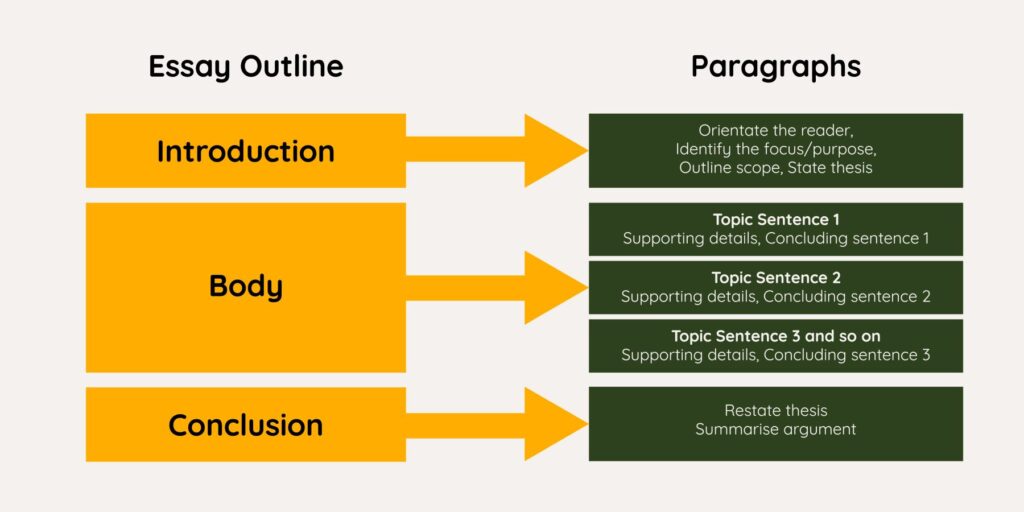
A video essay is still ultimately an essay, just in a different medium. So it only makes sense to structure your video the same way. Approaching your video essay this way can help you organize your essay, create your script, and layout the flow of your video.
The introduction
Your introduction should introduce your topic in a way that grabs people’s attention, lay out what argument or analysis you’re going to be making (also known as a thesis statement), then outline the points you’ll be covering to back it up.
Your thesis statement is the question or point your entire essay is built around and will answer. It should be your stake in the ground on a subject. A good thesis should make a stand, be specific, be worth creating an entire essay around, and to some degree, be controversial. You shouldn’t be trying to cover everything – you just want to make one strong, well-supported point.
Let’s use this video essay from creator Jam2go titled “The Entire History of Cat Memes” as an example. Yes, the video is about the history of cat memes. In his intro, he presents his thesis: that cat memes have evolved based on our culture and the sites of each era in time, so by charting the course of cat memes, we can see the direction our culture is moving in.
It’s everything I laid out before – a stake in the ground, specific, interesting, and definitely controversial – after all, how can cat memes really tell us about culture? But it sparks curiosity and makes you want to hear him out, to see what his argument is.
He also uses his introduction to explain the methodology of his approach, including defining what a cat is in the context of this video, along with what a meme is. Which is all important context to set up before diving into the body of the essay, along with providing credibility to his arguments.
The body
From there, you can dive into the body of your essay, which is where you’ll provide examples and points that support your thesis. This is the meat of your argument and should be the bulk of your essay, as it’s what will actually convince your audience to see the point you’re trying to make.
In a traditional written essay, the body is made up of paragraphs that have a topic sentence.These are important because they tie back to your thesis and they give your audience an idea of what you’ll be discussing in the paragraph. These can either be left in your final script, or become chapter titles for your video.
There’s no real limit to how long your body should be or how many paragraphs it should have – it all depends on how many examples and how much information you need to include to argue your thesis.
Going back to The Entire History of Cat Memes, the body of his essay is broken out into different eras of cat memes, starting from the 2000s, then going decade by decade until he swings back to ancient memes and ends with his predictions for the future. It has a logical structure and flow that ends with bringing it back to his original thesis.
The conclusion
Now, it’s time to wrap everything up in a neat little bow with your conclusion. This is where you remind your viewers what your original thesis was, and sum up how everything you talked about in the body of your essay proves it’s right.
You want to keep your conclusion comprehensive, but brief. You don’t need to get back into everything you already talked about in the body – just how, at a high-level, your analysis in the body all adds up to support your thesis.
2. Show, don’t tell
If you create a video essay without taking advantage of being able to show visuals to enhance your argument and make points, you’re missing out on one of the key advantages of the medium. You have clips, stills, animations, on-screen text, and more at your disposal to help you prove your point. Be sure to use them strategically though!
Any visuals you use should illustrate your point, rather than just blindly repeat what you’ve already said. For example, if you’ve got a longer video essay, you might want to have a graphic that shows the different parts of your video, with your thesis listed at the bottom as a reminder. So when you go through each section, that graphic shows to indicate to the viewer where you’re at in the video and also reminds them of the main point you’re trying to prove.
Or if you’re talking about a scene from a show or movie, drop in a clip to show the viewer what you’re talking about. You can also use b-roll footage to show things like different settings or scenes that tie in to what you’re talking about at different points. Take advantage of what you’re able to show with video, instead of just telling.
For example, in the video essay “booktok, brainrot, and why it’s okay to be a hater”, the creator alisha not alihsha uses tons of different kinds of visuals. In some parts, she’ll emphasize a point she wants to make by showing quotes on the screen, or show a post or video from another creator. She also uses title cards with chapter titles to transition between the different parts of her videos to give her audience a visual cue that she’s moving into a new section of the video.
3. Structure your video like a story
If you’ve already laid out your video based on the traditional essay format, you have all of the key information you need in there that can serve as the basis of your script. The next step after that is to make it engaging. This is a video that’s going online after all, so it needs to get people’s attention and keep it.
To do that, you need to use those narrative techniques we talked about earlier. Open with a hook that makes people interested enough to want to keep watching. Save your strongest point for last in the body of your video, so you’re building up to a climax point that keeps your audience curious. Make the ending satisfying, with a clear takeaway.
We’ve got a whole article that talks about narrative techniques and a whole course on video storytelling, but the main thing to remember is that you need to get people invested in what you’re talking about. So structure your video like a story to keep them engaged.
4. Keep it authentic and natural
As you’re writing your script, your personality will most likely come across in your writing. From phrases you use to jokes you add in, try to make sure your script really sounds like it’s coming from you. Audiences will appreciate your authenticity more than something that’s dry, safe, and professional sounding.
5. Edit with purpose
When you get to the editing phase of creating your video, you need to be decisive. Anything that doesn’t serve the argument you’re trying to make, even if you like it for other reasons, should be cut.
At the same time, your video also needs to be interesting enough to capture someone’s attention for the full run time – so mixing up your visuals or transitions is important. If you find that your eyes are glazing over at a certain part, think of how you can use editing to make it more visually engaging.
Pre-made templates, b-roll, sound effects, and other media are a great option to mix up your video. A stock media subscription like Storyblocks, which gives you unlimited downloads of over 10 million royalty free assets, can be a great resource to help you bring your video essay to life.
Sharing your rough or final cut with someone else before you hit publish can be helpful, too. They can help point out areas that need a better transition, where a visual aid could be helpful, and other things you may have missed.
Stock media can help bring your video essay to life
If you’re a writer who’s considering trying out video essays to bring your work to life, or a creator who’s interested in trying out this video format – you should do it. There’s an active community of video essayists and audiences who seek them out on YouTube, along with other platforms like the /r/videoessay subreddit.
Once you get to editing your video, Storyblocks is here to help. With our library of over 10 million royalty free stock assets, you’ll have unlimited downloads of professionally created assets to help you bring your video essay to life. With industry-leading licensing that protects you from copyright issues and a high-quality library that has new content added daily, you’ll have everything you need to create the best work possible.