On the surface, rushing pre-production may seem like a good way to save time. Even the most seasoned video editors and producers can easily slip into cutting corners to expedite the process. But why is this part of the process often rushed?
Pre-production is everything that happens before the camera starts rolling. This includes finalizing the budget, assembling a crew, storyboarding, deciding on the shoot locations, and more. It can be boring compared to other parts of the production process, which is why it’s often rushed and deprioritized. But a smooth filming and post-production depend on how solid your pre-production is. Things could easily go wrong when you scramble through this stage.
That’s why Storyblocks created a guide, 5 video workflow bottlenecks creative teams face – and how to fix them, to help you determine the most common obstacles that are slowing down video teams and how to prevent and fix them. We also chatted with producers and editors to learn more about their pre-production experiences and the systems they’ve built.
Why pre-production is the most underestimated phase
While planning, budgeting, and finalizing schedules aren’t the most exciting parts of a video, not locking these in can derail a project and snowball into major workflow issues. Like a house that requires a solid foundation for the whole structure to remain stable, video and film production also require solid pre-production planning for the entire production to run smoothly.
Kyle Miller, Manager of Video Production at Storyblocks, recalls how when he was working on a few YouTube videos, “the scope kind of crept on them while concepting,” and he didn’t fully grasp how much it would impact the production. “We basically scrapped the entire video, because we went straight into production, but the pre-production was so disorganized,” shares Kyle.
If you don’t spend time finalizing the schedule and timeline, you might be lost as to whether the filming stage should be done by now or not. And if you don’t look at the numbers carefully, you might go over budget or find yourself unsure where to secure additional funding. Both instances could affect your relationship with the rest of your team, not just cause delays.
The domino effect of poor planning
Every small oversight has the potential to trigger a chain reaction of issues. While you may think it’s just a small setback now, it can turn into a bigger problem during the actual production or even afterwards.
Maggie Linder of Freethink shares an incident when she was an assistant editor where a project took “probably 10 times the amount of time to prep for an editor.” The cause? Timecode and frame rate issues. “It’s like the rule of an ounce of prevention, right? An ounce of prevention does the world of good. It’s those little things… the extra 60 seconds on set to check something can save a ton of time in post,” she adds.
After skipping storyboarding during pre-production, Miller realized how much that one piece of planning snowballed into bigger issues down the line. “Without having that storyboard and getting approval on that, and getting design feedback on that, then the rest of the project was weaker and took longer,” adding that he was just “winging it and throwing things together as I went.”
So while it sounds smarter to hit production head-on, almost always, there will be consequences when you don’t have solid planning. What happens in pre-production revolves around optimization and productivity.
Tyler Lessard, CMO at Technology Advice notes that “workflow inefficiency doesn’t just reduce your output.” It can also lead to frustration and complacency. This could lead to a domino effect, resulting in a morale hit that “shows up in lower quality content or outcomes – despite the team putting in more time and effort to deliver.”
How simple systems can help prevent bottlenecks
So how can we do better? Now that we’re clear on why is pre production important, how can we prevent bottlenecks?
It doesn’t have to be complicated. The best place to start is with a simple system. Chris Lavigne, Head of Production at Wistia, shares that what really helped them prevent bottlenecks was locking the script before the shoot. “We learned really early to scrutinize the script and take a ton of time in the pre-production process,” he says, adding that it was also important for them to ensure they have the right stakeholders to weigh in. “That has proven to be a very valuable time spent for us.”
Miller also mentioned that creating a logline is part of the pre-production workflow steps that he follows. This logline helps him “figure out exactly what the video is about, so you have a North Star that every decision can be based on.”
Accounting for all the variables of a project early
Understanding the variables when going into a project is also very important. “Do you have an infinite amount of time, or no? How many people do you have to put on this project? Is it just you? Is it a full team? Can you afford to hire motion graphics?” Lavigne listed out, adding that these things will drive the direction of the video project. He iterates that it’s important to understand the constraints you and your team will most likely face and from there, “working backwards from there to create a project plan.”
Having a central place where all of your planning lives
Implementing a centralized platform/tool for video content ideation, production, and feedback can also be effective in strengthening your pre production planning. Lessard says doing this was “a huge win” as it allowed their team to be “more collaborative, faster to create, and much more efficient in our video creation processes.”
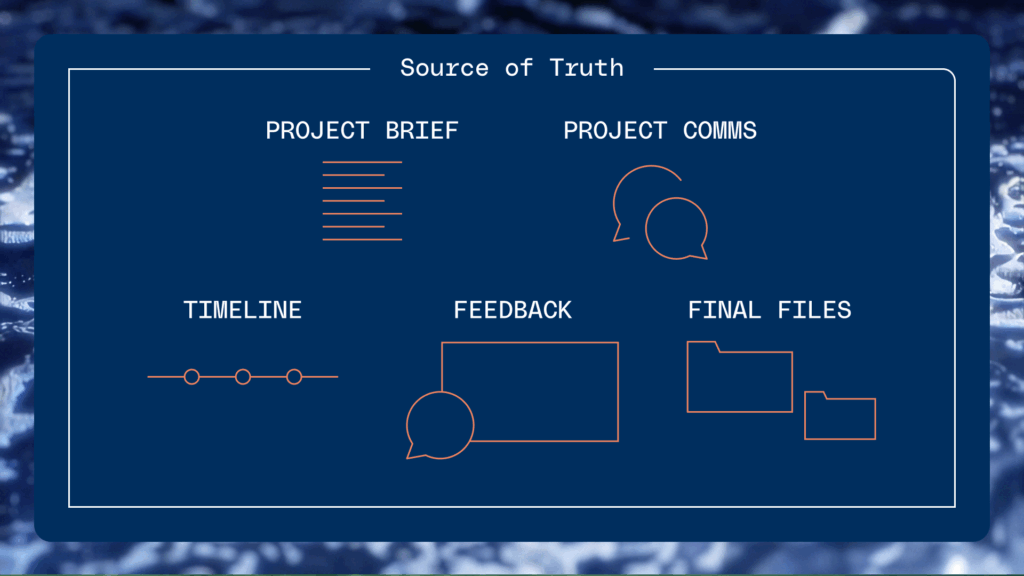
After all, pre-prod is not just about finalizing everything that has to do with the actual filming or production. It’s also the perfect time to create systems and determine the right tools to use for seamless sharing and communication with the rest of your team.
Not all systems created are helpful; some would require trial and error, especially if you’re new to filmmaking and video production. But putting in the time to build a pre-production system or workflow setup could mean saving yourself from future issues during production and post-production. It means saving your whole team from bottlenecks that would otherwise cause delays or other internal problems within the team.
Download your copy of our workflow bottleneck guide
Sometimes, what you think is going to save you time is actually going to cost you more in the end. Not just time but also budget, patience, and your relationship with your team. While it may take more time up front, that investment pays you back down the line.
As Lessard notes, streamlining processes can help “empower your team members to do their best work, in a more collaborative way, faster and with better results.” He adds that this can also “help maintain the excitement and passion for timely projects, which can make a huge difference in your outputs and outcomes.”
Pre-production is where you set your team up for success. It’s not just about planning things, securing the budget, and nailing down scripts. Pre-production is a cornerstone of every production, and it can make or break the whole filming and editing process. Which is why we also created guides like 5 video workflow bottlenecks creative teams face – and how to fix them to further help creators and marketers like you identify obstacles and how you can save your team from them.